Mobile HR Software: 7 Team Benefits in 2026
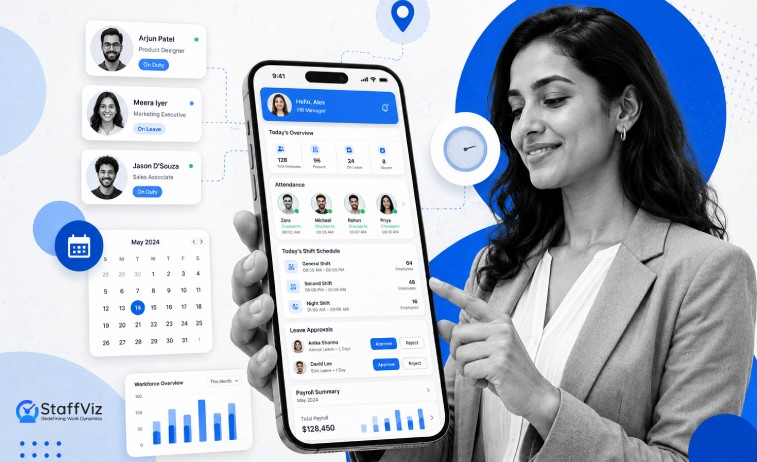
Mobile HR software is a cloud-based human resources application designed for smartphones and tablets that enables employees and managers to handle workforce operations from anywhere. Unlike legacy desktop portals, these platforms give non-desk workers, remote employees, and field teams instant mobile access to payroll, schedules, benefits, and time tracking.
Think of it as your entire HR department in your pocket. From clocking in at a remote job site to approving a teammate’s PTO request during your morning commute, mobile HR apps eliminate the operational friction that slows modern organizations down.
Why Do Teams Need Mobile HR Software in 2026?
The modern workplace is decentralized. With a significant portion of the global workforce operating in hybrid, remote, or field-based roles, including retail, healthcare, construction, and hospitality staff, forcing employees to sit at a desktop computer to complete basic HR tasks creates immediate operational bottlenecks:
- Missed Clock-Ins: Inaccurate manual entries lead to frequent payroll disputes.
- Delayed PTO Approvals: Unprocessed time-off requests frustrate staff and disrupt scheduling.
- Compliance Risks: Paper-based logs elevate audit risks and labor law violations.
- Information Silos: Disconnected workers miss key policy updates and organizational news.
Mobile HR platforms eliminate these inefficiencies by putting core workflows directly onto employees' smartphones.
7 Proven Benefits of Mobile HR Software for Teams
1. Instant Access from Any Location
Employees and managers can access HR tools 24/7 on iOS and Android devices without needing a VPN or desktop browser.
Field technicians can log start times upon arrival, remote staff can review health benefits during breaks, and managers can authorize leave requests between meetings. Unrestricted access ensures business continuity across distributed teams.
2. Accurate, Real-Time Time Tracking
Mobile time tracking uses automated verification tools to eliminate buddy punching, manual calculation errors, and time theft.
Modern mobile HR apps incorporate advanced time-tracking technology:
- GPS Stamping: Captures location coordinates at clock-in.
- Geofencing: Permits clock-ins within designated project perimeters.
- Biometric Verification: Uses facial or fingerprint recognition to verify identity.
- Automated Overtime Alerts: Warns supervisors before expensive overtime thresholds are breached.
- Real-World Impact: A regional services company with 120 field workers cut payroll processing errors by 67% within 90 days of deploying mobile GPS time tracking.
3. High-Adoption Employee Self-Service (ESS)
Workers independently manage routine HR activities directly from their devices, drastically reducing administrative support tickets.
Instead of emailing HR with routine inquiries like "Where is my pay stub?" or "How many vacation days do I have left?", staff complete these actions independently:
- Viewing and downloading digital pay stubs and W-2 forms
- Checking real-time PTO balances and submitting time-off requests
- Updating tax withholding (W-4), direct deposit, and address details
- Enrolling in health benefits during open enrollment periods
- Reviewing and signing company policy handbooks digitally
4. Direct Communication & AI-Driven Team Alignment
Push notifications, instant announcements, and automated shift-reminders keep distributed workers informed instantly.
In 2026, mobile HR apps leverage push alerts and AI summaries to deliver policy changes and schedule updates directly to lock screens. Read-receipt tracking creates a complete audit trail for those who review crucial communications.
Real-World Impact: A multi-location restaurant group issued an urgent policy update to 400+ employees using mobile announcements. 100% of the team reviewed and acknowledged the update within two hours, a process that previously took days via email.
5. Automated Compliance and Audit Preparedness
Digital, time-stamped records ensure automatic adherence to labor laws, meal break rules, and overtime mandates.
Mobile HR software automatically enforces labor standards by enforcing mandatory break periods, maintaining encrypted audit trails, and notifying management of impending compliance risks.
6. Higher Employee Engagement and Retention
Delivering intuitive, consumer-grade technology signals that an organization values its employees' time and convenience.
Employees expect workplace technology to mirror the seamless performance of modern banking or shopping apps. Mobile HR apps elevate workplace satisfaction through mobile peer recognition, 30-second pulse surveys, goal tracking, and digital onboarding.
7. Measurable Cost Savings and Rapid ROI
Mobile HR platforms pay for themselves by slashing administrative overhead, payroll errors, and employee turnover.
Organizations typically experience savings across four main operational areas:
- Admin Efficiency: HR teams spend up to 40% less time resolving manual inquiries.
- Payroll Accuracy: Automated tracking cuts payroll errors by 2% to 4%.
- Turnover Reduction: Streamlined communication and self-service boost retention.
- Penalty Avoidance: Automated compliance alerts protect against costly regulatory fines.
Most organizations achieve a complete return on investment (ROI) within 6 to 9 months of deployment.

Key Features to Look For in 2026
When choosing a mobile HR platform, ensure it includes these critical capabilities:
- Offline Functionality: Core functions (like clocking in) store data locally during connection drops and auto-sync once service resumes.
- Bank-Level Security: Requires biometric login, multi-factor authentication (MFA), end-to-end data encryption, and SOC 2 Type II compliance.
- Seamless API Integrations: Connects directly with existing accounting software, payroll engines, and scheduling platforms.
- AI-Assisted Self-Service: Intelligent bots answer routine employee policy questions directly inside the mobile app.
Top 5 Best Mobile HR Software Platforms in 2026
Here are five leading mobile HR platforms for managing field, frontline, hybrid, and distributed teams.
1. StaffViz — Best for All-in-One Workforce Management
StaffViz is built specifically for mobile and deskless workforces. It combines GPS time tracking, geofenced clock-ins, offline punching, PTO, timesheets, and instant notifications in one mobile app. Best suited for construction, logistics, healthcare, and hospitality teams.
2. Rippling — Best Mobile-First HR Platform for Field Teams
Rippling combines HR, IT, payroll, and automation on one platform. It is ideal for growing organizations that need extensive integrations and global workforce capabilities.
3. BambooHR — Best for Ease of Use
BambooHR provides a simple mobile HR experience for small and mid-sized businesses. Employees can manage PTO, onboarding, and personal information from their smartphones.
4. Gusto — Best for Payroll-Focused Businesses
Gusto combines payroll, benefits, and core HR tools for small businesses. Its mobile experience gives employees access to pay information, benefits, and time-off management.
5. Paycor — Best for Frontline Workforces
Paycor supports workforce management, scheduling, payroll, and time tracking. It is well suited for industries with frontline teams and complex shift schedules.
Mobile HR Software vs. Desktop HR Software
| Performance Criteria | Legacy Desktop HR Software | Modern Mobile HR Software |
|---|---|---|
| Accessibility | Restricted to office workstations | Available anywhere on iOS and Android |
| Time Tracking | Manual logs or physical wall clocks | GPS-stamped and geofenced mobile clock-in |
| Approval Speed | Hours to days | Minutes |
| Field Worker Adoption | Very low | Exceptionally high |
| Communication | Static email updates | Instant push notifications with read tracking |
| Infrastructure | High maintenance / On premises | Scalable, cloud-native architecture |
The Bottom Line
Mobile HR software has transitioned from an optional convenience to a core requirement for modern organizations. In 2026, empowering employees with mobile-first HR tools drives higher engagement, lowers administrative costs, and ensures strict operational compliance.
Frequently Asked Questions
What is mobile HR software?
Mobile HR software is a mobile application that lets employees and managers execute core HR duties such as time tracking, leave management, pay stub access, and benefit enrollment, directly from smartphones or tablets.
How does mobile HR software help field and remote workers?
It gives non-desk employees full access to company tools. Remote workers can log hours, request time off, access pay records and receive critical notifications in real time without needing a desktop or office network.
Is mobile HR software secure?
Yes. Enterprise mobile HR platforms enforce strict security measures, including multi-factor authentication, biometric logins, end-to-end encryption, and compliance with SOC 2 and GDPR standards.
How much does mobile HR software cost in 2026?
Most cloud platforms cost between $4 and $16 per employee per month, depending on feature depth. Reduced administrative workload and payroll accuracy typically yield full ROI within 6 to 12 months.
Effectively Manage Remote and Hybrid Teams with StaffViz
Enhance team efficiency and collaboration with StaffViz, the ultimate tool for managing remote and hybrid teams.
Talk To Us